
Takamine Wood Shop: Koa
Takamine Wood Shop: Koa


News flash: guitars in the modern era are made of many different kinds of wood, and the choice of wood — especially in acoustic or acoustic-electric guitars — has a huge impact on the tone and responsiveness of the instrument. While most musicians tend to think of just a few wood types for use in acoustic guitar bodies, there are many other terrific wood varieties that each present their own advantages. Today, we’ll take a close look at that distinctive beautiful — and beautiful-sounding — wood from the Hawaiian Islands, koa.
Just the Facts
Found exclusively on the Hawaiian islands of Hawaiʻi, Maui, and Oʻahu, Acacia koa is a large tree, typically attaining a heights of 50-80 feet or larger. Koa is fast-growing, making it a very sustainable wood for instrument crafting and other purposes. Ancient Hawaiian people used koa for their dugout outrigger canoes. In the world of music making, given its origin, it’s no surprise that the first use of koa was for ukuleles, but that sweet and lovely tone was soon implemented into acoustic guitars as well. Its density and its luxurious grain give koa both a sonic and visual appeal.

Takamine G Series GN77KCE
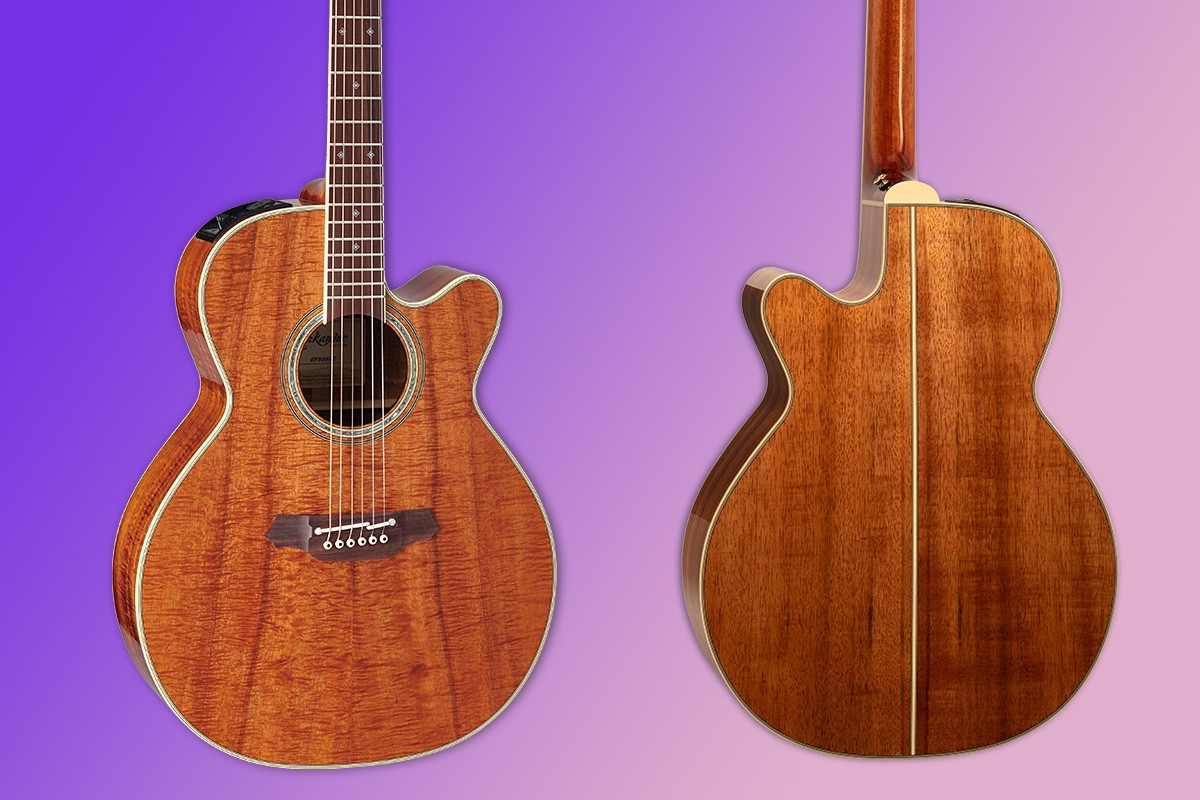
Takamine Legacy Series EF508KC

Takamine Limited Edition Series THE 60TH
How Does It Sound?
Overall, koa offers a substantial midrange that is similar to mahogany, but also delivers the resonant high-frequency content that’s more akin to maple. But that’s just the start of the story; koa guitars — especially all-koa models where the wood is used for the top as well as the back and sides — change over the course of time. A koa guitar that may sound a bit bright or brittle on first strum will mellow the more that you play it, expanding the midrange and deliver a more balanced, rich, and sweet tone as the years go by. In any case, the lovely sound of a koa-based acoustic guitar — especially after it’s played-in — is highly desirable and unique in the best of ways.
And a side note: a good portion of tone — as the old saying goes — is in your hands. Fingerstyle players who tend to use the fleshy part of their digits will love koa right away. If you’re a guitarist who relies on a pick and tends to play heavy, you may need an adjustment period to get familiar with koa’s response. Even so, try a lighter plectrum and see what happens. Koa does a lot of the work for you in achieving a balanced tone for many styles and genres of music.
How Does It Look?
Simply put, koa is a beautiful wood. Its color varies from pale blonde to dark chocolate brown, but as a whole, koa tends to exhibit red/gold hues with darker streaks. Its grain can be straight, wavy, or highly figured. Some koa guitars have a nearly 3D effect, with its appearance changing when viewed from different angles. Also, koa offers a natural luster, especially when implemented in a natural gloss finish.
What Takamine Guitars Use Koa?
At the time of this article, Takamine currently offers four models with koa. These include the shockingly affordable G Series GN77KCE, the handcrafted EF508KC from the Legacy Series, and two spectacular Limited Edition guitars: the 60th anniversary model simply called THE 60TH, and the most recent annual LTD model, the LTD2025, which pairs a solid koa back to a solid Englemann spruce top.

PRICING AND SPECIFICATIONS SUBJECT TO CHANGE
Terms of Use | Privacy Policy | Contact Support
©2024 The ESP Guitar Company, 5433 West San Fernando Rd, Los Angeles, CA 90039 USA - PH: (800) 423-8388 - INTL: (818) 766-2097 - FAX: (818) 506-1378
Design by SilverFrog